

Drama
Team Leader - Helen Hasan
Year 7
Term 1: Drama Skills
The first term is fundamentally an introduction to what drama is and how to access it in an educational setting. For some children, this will be their first experience of exploring a theme, topic or text through practical exploration, so the instillation of stagecraft techniques are paramount to success as the students learn how to work safely and respectfully in a drama space.
The first term is designed to empower the learners to feel confident about embodying a range of characters whilst learning about the different ways in which we can capture key moments in a theatrical space. The skills are deployed through an exploration of Drama History, from the Greeks to the more contemporary practices of Frantic Assembly and The Paper Birds.
Term 2: Private Peaceful
Once the fundamental skills are in place, we move onto explore a cherished text by Michael Morpurgo called Private Peaceful. The text explores the journey of the Peaceful brothers post and during WWI. Adapted for stage by Simon Reade, the play carefully captures the key theatrical moments from the novel, providing the learners a chance to explore the themes contained within the play in an engaging and thought-provoking way. The term culminates in an assessed performance of the No- Man’s Land scene, where Tommo and Charlie are faced with life affirming decisions. Here the students embody the characters, including Pete and Sargeant Hanley, utilising costume, sound and set to demonstrate their appreciation of character interaction, tension and emotional range.
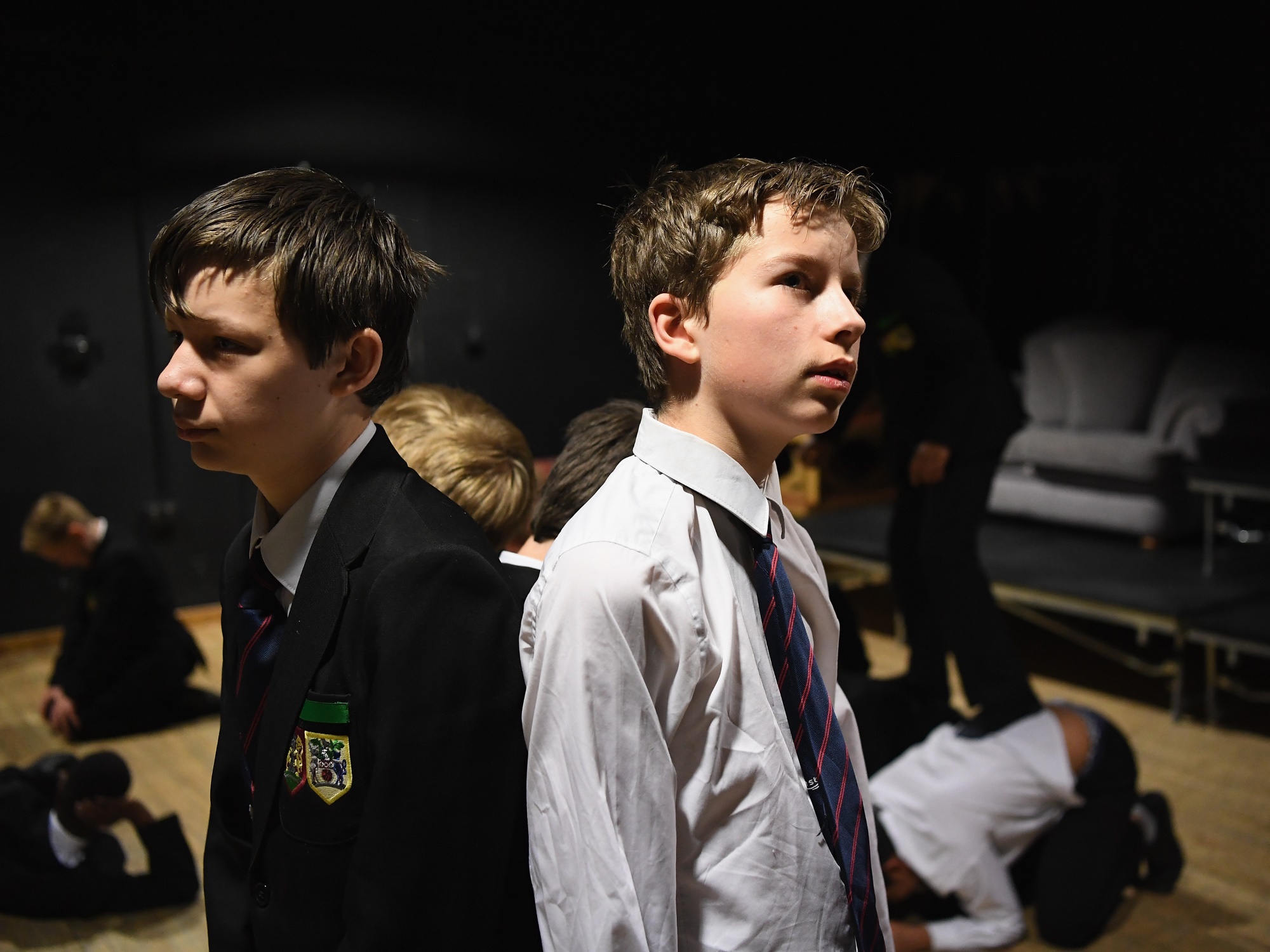
Term 3: Darkwood Manor
The final scheme in Year 7 is a well- loved narrative about a venture to a haunted house, along the Nine-Mile Causeway (a fusion of the original scheme with elements of the Woman in Black). Here the students apply their understanding of mood and atmosphere to create key moments as the story unfolds. The scheme of learning unlocks the students’ imagination, which is designed to develop their improvisation skills, physicality and devising techniques, essential to later learning. The scheme begins with a poster- advertising the chance to win £1000.00 fast cash- and ends with a fateful overnight stay at the alleged haunted Darkwood Manor. The scheme empowers the students to make dramatic decisions, direct their peers and work collaboratively as the stimulus unfolds. The joy of this scheme are the weekly questions of, ‘Is it real? Can I google it? Or ‘Is there a film?!’
Year 8
Term 1-2: The Scottish Play
A well- loved scheme that introduces the learners to the bard! After a brief introduction to William Shakespeare’s life and early years, we embark upon a theatrical investigation into one of Shakespeare’s most revered horror stories, set on a desert heath. With sword fighting and fake blood at the ready, we delve into the key themes, exploring the role of the witches, the letter, the daggers, Banquo’s ghost and Act V, Scene VIII where Macbeth meets the wrath of Macduff. It is a brilliant scheme, that ignites the learner’s passion for Shakespearean text and all things gory that go hand-in-hand with the tragedies.
Term 2-3 Billy Eillott
To complete the carousel, the learners explore key moments from both the West End musical and screenplay of Billy Elliott, appreciating the importance of social and historical context through practical inquiry. Themes of belonging, social identity, gender norms and societal misconceptions, this scheme allows the students to engage more extensively with the text and discover the importance of the given circumstances. Alongside the scheme, the leaners are encouraged to reflect upon the emotionality and tone of the extracts, exploring character and subtext as the scheme unfolds. As with all schemes at Northampton School for Boys, we encourage investigation and inquiry, culminating in an enjoyable scheme of learning that looks at the complexity of family life and the importance of discovering oneself even when the odds are against you.
Year 9
Term 1 & 2: Comedy and Tragedy
Over the course of the first full term, the students examine two contrasting schemes. The first scheme entitled, County Line, investigates the influence of an ‘elder’ on a troubled teenage boy, using naturalism as a form of expression and elements of Theatre in Education (T.I.E); the second scheme explores a re- working of Carlo Goldoni’s, A servant of Two Masters, called, One Man Two Guvnors. Here the students learn about elements of Commedia dell’ Arte to provide a greater appreciation of the narrative and style of storytelling. This scheme is particularly important as it paves the way for later learning in KS4, providing the students with the building blocks to access the GCSE specification.
Term 3 & 4: DNA
DNA, the infamous play, written by Dennis Kelly is deconstructed over two terms. Here the learners read the entirety of the play, whilst exploring key scenes, in turn understanding and appreciating the themes, characters and subplots contained with the stage play, originally written for the Connections Festival at The National, in 2007. The learners go onto investigate status, subtext and proxemics, whilst examining what it means to belong and the lengths people are prepared to go to for the greater good.
Term 4 & 5
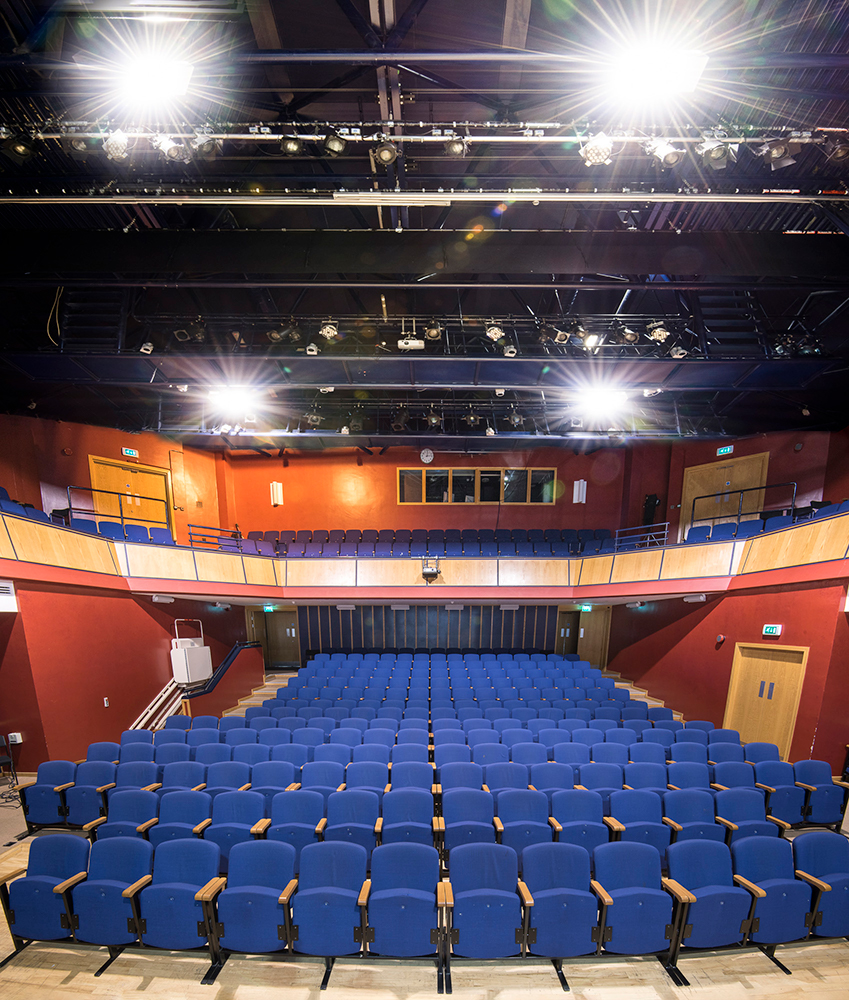
During Terms 4& 5, the learners explore a range of monologues in order to participate in the National Youth Monologues, perfecting their craft to compete with hundreds of young thespians in this prestigious competition. Students are guided to select a monologue from either a Contemporary, Classical, Screen or Original source and then rehearse and refine their monologue to present a polished performance to the class. If willing, the students are given the opportunity to enter the National Youth Monologues Competition. Later in the scheme, parents are invited to see their son perform at The Cripps Theatre in a celebration of performance to prep them for the main event.
Term 6: 13th
To conclude the curriculum provision for KS3, the learners explore historical elements of the Transatlantic Slave Trade and how (and when) the 13th Amendment was ratified. The scheme provides the learners with an important and poignant stimulus to discover, initially responding to historical facts, poetry or prose before going onto apply their learning into a chosen dramatic narrative, becoming playwrights and directors in the process. By term 6, the students have made decisions about their academic pathway into GCSE therefore we feel it essential to conclude the year with engaging and thought- provoking material. At the end of the year, the learners are equipped with the fundamental skills to access the GCSE specification should they chose to continue with Drama in KS4.
KS4 Drama
Over the course of the first year, the students embark upon two shortened versions of the AQA GCSE Drama course in preparation for the second year where each component unit contributes towards the final GCSE grade. In short:
This qualification is linear. Linear means that students undertake all non-exam assessment (NEA) in the certification year and sit the written exam at the end of the course.
Subject Content
The subject content details the knowledge, understanding and skills that students are expected to develop throughout the course of study. The subject content for GCSE Drama is divided into three components:
1. Understanding drama: Written exam: 1 hour and 45 minutes/ Open book- 80 marks and worth 40% of the overall GCSE. The students are assessed on their knowledge and understanding of drama and theatre through the study of one set text from a choice of six; The Crucible, Noughts and Crosses, Hansel and Gretel, The 39 Steps, Blood Brothers and A Midsummer Night’s Dream. In this paper, the students also need to communicate their analysis and evaluation of live theatre makers. The paper is broken down into three sections:
- Section A: multiple choice- where students demonstrate their awareness of theatrical staging, space, roles and responsibilities, how theatre is communicated to an audience (4 marks)
- Section B: four questions on a given extract from the set play chosen (44 marks)
- Section C: one question (from a choice) on the work of theatre makers in a single live theatre production (32 marks)
2. Devising drama: The students are assessed on the process of creating a devised piece of drama, providing a detailed analysis and evaluation of their own work throughout the process. The students produce a devising log (60 marks) to support the performance (20 marks), combined to make a total of 80 marks and worth 40% of the overall GCSE. This component is marked by teachers and moderated by AQA. The students can specialise in a range of areas to include:
- Performer
- Lighting designer
- Sound designer
- Set designer
- Costume designer
- Puppet designer
3. Texts in practice: The students are assessed on the performance of two extracts from the same play (students again may contribute as performer or designer) which must contrast from the set text in Component 1. Each performance extract is awarded up to 20 marks (and worth 40 marks in total) contributing to 20% of the overall GCSE score. This component is marked by AQA.
KS5 Drama
This qualification is linear. Linear means that students undertake all non-exam assessment (NEA) in the certification year and sit the written exam at the end of the course.
Subject Content
There are 3 components;
1. Drama and Theatre: This unit is designed to develop the student’s knowledge and understanding of how drama and theatre is developed and performed, learning how to analyse and evaluate live theatre. This will involve attending the theatre and the study of two set plays, one pre-20th Century and one from the 20th/21st Century. The students will explore context, conventions, form and structure and investigate the theatrical processes and practices involved in interpreting and performing theatre for an audience.
2. Creating Original Drama (devising): This is a practical component where the students will create and develop ideas; communicate meaning as part of the theatre making process, make connections between dramatic theory and practice and apply theatrical skills to realise artistic intentions in live performance.
3. Making theatre (scripted performance): This is a practical component in which the students will apply theatrical skills to realise artistic intentions in live performance and analyse and evaluate their own work.